Cross-Contamination 101

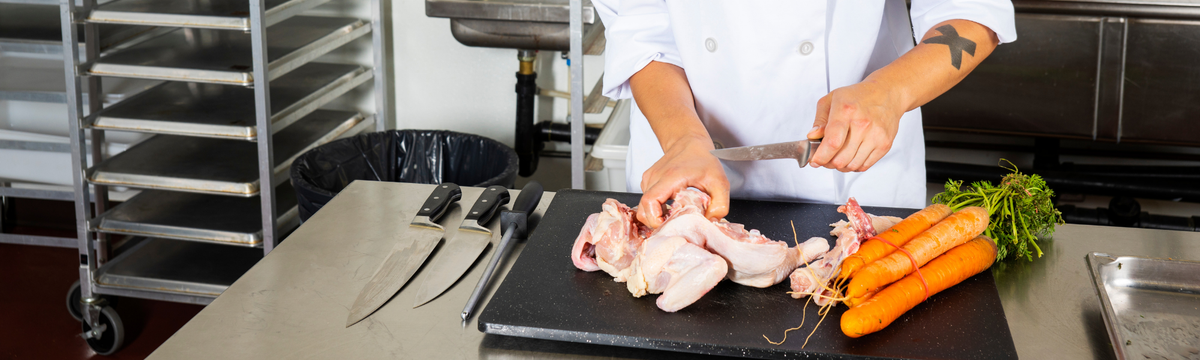
It doesn’t take a major outbreak to ruin a restaurant’s reputation — sometimes it’s as simple as a cutting board. Picture this: raw chicken gets sliced, the board is given a quick wipe, then it’s reused for prepping lettuce. What looks harmless in the moment can send dozens of guests home sick by nightfall. That’s cross-contamination, and it’s one of the fastest ways bacteria can travel from kitchen to customer.
What Is Cross-Contamination?
Cross-contamination happens when harmful bacteria or allergens transfer from one food, surface, or piece of equipment to another. It can be direct (raw meat juices dripping onto ready-to-eat foods) or indirect (a worker’s hands moving germs from one dish to another).
According to the FDA Food Code, preventing cross-contamination is a cornerstone of food safety. Even trace amounts of pathogens like Salmonella, E. coli, or Listeria can cause illness if they hitch a ride from raw to ready-to-eat food.
Why It Matters: The Risks at Stake
Cross-contamination is responsible for a huge portion of foodborne illness outbreaks. The CDC estimates that Salmonella alone causes *1.35 million infections, 26,500 hospitalizations, and 420 deaths in the U.S. each year. Many of these cases stem from improper handling in kitchens — not food that was unsafe when it arrived.
For operators, this means:
- Who gets hurt: Guests (especially children, elderly, or immune-compromised) are most vulnerable.
- What’s at risk: Beyond guest health, violations tied to cross-contamination are among the most commonly cited during inspections.
- Where the impact lands: A single incident can bring fines, lawsuits, or long-term reputational damage.
Where It Happens in Real Operations
Cross-contamination can sneak in anywhere food is prepared:
- Cutting boards & knives: Raw meats, then produce.
- Hands & gloves: Poor handwashing between tasks.
- Storage areas: Raw chicken on the top shelf dripping onto salad greens below.
- Shared equipment: Mixers, slicers, or utensils not sanitized between uses.
- Service & buffets: Shared tongs or ladles moving from dish to dish.
Real-World Example: In 2018, a Salmonella outbreak in Illinois was linked to a restaurant where raw poultry was prepped on the same surfaces as vegetables. Over 30 people became ill, and inspectors cited cross-contamination as the primary cause.
When It Becomes a Problem
Cross-contamination risk spikes during:
- Peak rush hours → shortcuts on cleaning and handwashing.
- Catering events → large volumes of mixed prep without dedicated stations.
- Holiday buffets → shared serving utensils and high turnover.
- Staff shortages → employees multitasking without proper hygiene breaks.
How to Prevent It: Best Practices That Work
Separate
- Use color-coded cutting boards (red for raw meat, green for produce, blue for seafood).
- Store raw proteins below ready-to-eat foods in coolers.
Clean
- Wash, rinse, sanitize all surfaces and utensils between uses.
- Change sanitizer buckets regularly and test concentration.
Train
- Reinforce handwashing after handling raw products.
- Teach staff why glove changes matter (gloves aren’t magic).
Verify
- Use checklists and monitoring logs.
- Spot-check practices during service.
Invest
- Consider disposable cutting mats for raw poultry.
- Upgrade to antimicrobial cutting boards that resist bacterial growth.
The Bigger Picture: Why Operators Should Care
Cross-contamination isn’t just about avoiding a citation — it’s about protecting guests, staff, and your bottom line. A single outbreak tied to poor prep practices can undo years of building customer trust. In a competitive industry, food safety is part of brand reputation.
Checkout our resource center for valuable downloads
Final Word: Stop the Jump
From cutting board to plate, germs move faster than most operators realize. The fix isn’t complicated: separation, sanitation, and staff training. By tightening up against cross-contamination, kitchens protect their guests — and their future.
Cross-contamination risks don’t have to haunt your kitchen. Certivance offers Food Handler Training and Certified Food Protection Manager courses designed to reinforce daily best practices and compliance.
👉 Get certified today at Certivance.com and check our state-by-state regulation map for the requirements in your area.