Temperature Danger Zones

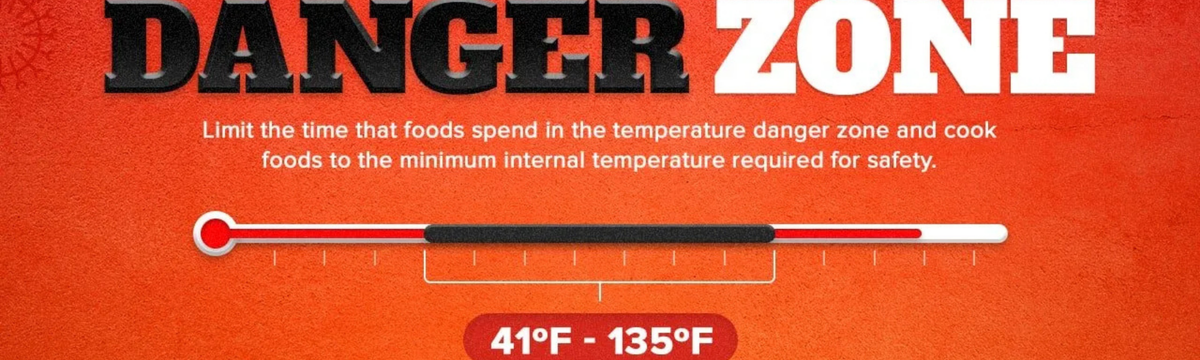
Every kitchen has rules, but one number can mean the difference between a safe meal and a foodborne outbreak: 41°F–135°F. Known as the “Temperature Danger Zone,” this range is where bacteria thrive. For operators, understanding this science isn’t just academic — it’s survival. A single mistake can trigger customer illness, fines, or even a business closure.
What Is the Temperature Danger Zone?
The FDA Food Code defines the Temperature Danger Zone as 41°F to 135°F (5°C–57°C) . Within this range, disease-causing bacteria like Salmonella, E. coli, and Clostridium perfringens can multiply rapidly. At their peak growth rate (around 70°F–125°F), bacteria can double in number every 20 minutes .
This means food left in the zone for just a few hours could go from safe to hazardous — even if it looks and smells fine.
Why It Matters: The Human Cost
Every year, foodborne illness affects 48 million Americans, sending 128,000 to the hospital and causing 3,000 deaths . Outbreak investigations often trace back to improper holding, cooling, or reheating within the danger zone.
- Who is most at risk? Young children, the elderly, pregnant women, and anyone with weakened immunity.
- What’s at stake for operators? Beyond customer health, violations of holding temperatures are one of the top critical health code violations cited during inspections .
Where the Danger Zone Appears in Operations
The danger zone isn’t just theory — it shows up across every corner of food service:
- Prep areas: Chopping vegetables or portioning meats left on counters too long.
- Buffets & catering: Steam tables or cold wells that don’t maintain safe temps.
- Cooling & storage: Leftovers placed in deep pans cool too slowly, staying in the zone for hours.
- Delivery & transport: Improperly insulated carriers during off-site catering.
Real-World Example: In 2015, a Clostridium perfringens outbreak at a catered holiday luncheon in Ohio sickened more than 60 people. Investigators tied it to improperly cooled beef left in the danger zone .
When It Becomes a Problem
The danger zone is most critical during four operations:
- Holding hot food → must be kept at 135°F or above
- Holding cold food → must be kept at 41°F or below
- Cooling cooked food → must drop from 135°F to 70°F within 2 hours, and from 70°F to 41°F within 4 hours
- Reheating food for hot holding → must reach 165°F within 2 hours
These aren’t just recommendations — they’re enforceable under local health codes.
How to Manage It: Tools & Best Practices
- Thermometers: Use digital probe thermometers for accurate readings. Calibrate regularly.
- Time tracking: Follow the “2-hour/4-hour rule” — discard food left in the danger zone for over 4 hours.
- Shallow pans for cooling: Increase surface area to help food cool quickly.
- Blast chillers: For high-volume kitchens, these prevent slow cooling risks.
- Staff training: Reinforce temp checks during pre-shift huddles and log everything.
Inspections back this up: A CDC study found that restaurants with strong written cooling policies were significantly less likely to experience outbreaks .
The Bigger Picture: Why Operators Should Care
The science behind the danger zone is clear — but the why runs deeper:
- Public health: Prevents illness, lawsuits, and reputational damage.
- Legal compliance: Avoids citations, fines, and license suspensions.
- Financial survival: A single outbreak can cost a business hundreds of thousands in lost revenue and settlements .
Download Our Minimum Cooking Guide
Final Word: Stay Out of the Zone
The danger zone isn’t just a number — it’s the frontline between safety and disaster. By keeping food out of 41°F–135°F, operators protect guests, safeguard their business, and uphold the trust that hospitality is built on.
Ready to take food safety to the next level? Certivance offers Certified Food Protection Manager (CFPM) and Food Handler Training — the courses that give your team the tools to manage critical control points like temperature.
👉 Get certified today at Certivance.com and check our state-by-state regulation map to see what’s required where you operate.